
If a Goan Local Planned Your Goa Itinerary, This Is What It Would Look Like

TL;DR:
A locally planned five day Goa travel itinerary built for slow travel, with village bakeries, island kitchens, heritage homes, local markets and time for unexpected discoveries.
By eight in the morning, a baker’s horn has sounded, ferries are crossing the river and the market is already wide awake.
Goa has begun its day. This Goa itinerary begins there.
A Goa itinerary for 5 days should show you one part of the state at a time, giving you more time to explore, taste and speak to people.
Along the way, you would see how Goa’s Hindu and Catholic traditions, Konkan roots and Portuguese influence have shaped its food, homes and everyday life. We did not simply preserve what history left behind. We adapted it and made it
Goan.
How a Goan Local Would Plan a Goa Itinerary for 5 Days
A local plan needs three things. One part of Goa each day, choices based on your interests and enough time for a proper lunch. In Goa, lunch is not fitted around the plan. The plan is fitted around lunch.
Plan Each Day Like a Goan Host, With Choices on the Table and No Hurry to Decide
In a Goan home, you are rarely given just one choice. Fish or vegetables? Rice or pao? Another helping often arrives before you answer.
Plan each day the same way. Choose one main experience and keep the rest flexible. If a baker stops to explain his oven, listen. The next stop can wait.
That is susegad. It means giving a good moment the time it deserves.
Learn One Local Word and Start One Unplanned Conversation Each Day
Begin with Dev borem korum, a common way to say thank you. Use it when someone serves you a meal, helps you at the market or points you in the right direction.
Konkani changes across Goan communities, so listen before trying to sound fluent. If the pronunciation comes out wrong, the person may correct you. That itself is a conversation.
Stay Around Panjim for Days 1 to 3, Then Move to South Goa for Days 4 and 5
Visitors often reduce Goa to one easy comparison. North Goa is busy, while South Goa is peaceful. A local sees a deeper difference in the language, food, architecture, markets and rhythm of village life.
Staying near Panjim gives you time for North Goa’s historic quarters, river islands and surrounding villages. Moving south brings you closer to its market towns, ancestral homes, quieter coast and inland hinterland. For a Goa trip for 5 days, changing base reveals Goa’s cultural shifts without long hours crossing Goa.
A Five Day Goa Travel Itinerary Through Villages, Kitchens and Local Stories
The Goa most visitors see is easy to find. The Goa travel itinerary we locals love takes longer to reveal itself. Give it five unhurried days and enough curiosity to let it surprise you.
Day 1 Begin With a Traditional Goan Breakfast, Explore Old Goa’s Christian Art and Churches, Paint an Azulejo and Walk Fontainhas at Dusk
Come hungry. Begin with chanyachi bhaji and pao at a neighbourhood café. Tear the bread with your fingers and use it to finish the gravy. If gravy remains, the pao has left its job incomplete.
Reach the Museum of Christian Art for its 10 am opening. Inside the Convent of Santa Monica, you will see how European Christian subjects were reinterpreted through Indian craftsmanship and local materials.
Walk from the museum to the St Augustine ruins, then continue to the Basilica of Bom Jesus and Sé Cathedral. The ruins show what time has taken, the Basilica what faith has preserved, and the Cathedral how power once expressed itself through scale. Together, they tell a fuller story of Old Goa.
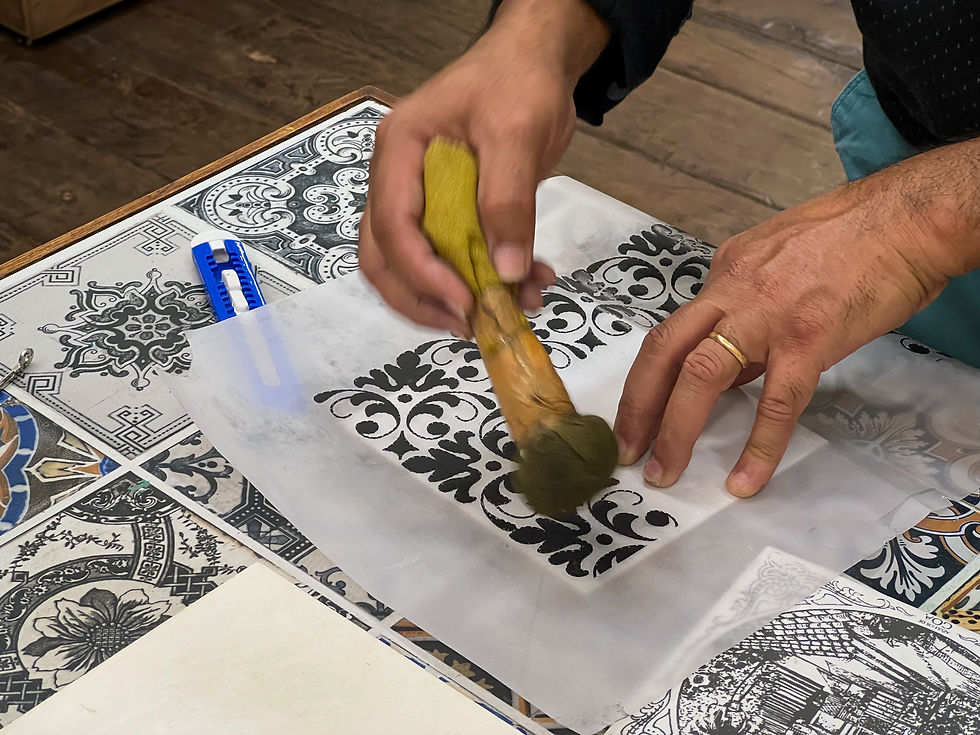
In Panjim, paint an azulejo, a decorative ceramic tile associated with Portuguese design and often used for Goan house nameplates. The neat blue patterns look easy until you try painting one yourself. If your first straight line comes out crooked, congratulations, you have just discovered how skilled azulejo artists are.
End in São Tomé and Fontainhas at dusk. Notice the shrines, sloping roofs, oyster shell windows and balcãos. People live in these neighbourhoods, so take your photographs without turning someone’s doorway into a film set.
Day 2 Explore Mapusa Market, Wander Through Moira’s Village Lanes and Roll Your Own Poie at a Traditional Wood Fired Bakery
Start early at Mapusa Market with one challenge. Choose an ingredient you do not recognise, ask its local name and find out how Goans cook it. Buy a little if curiosity wins. The cooking advice often comes free.
Friday is the market at full volume. Village sellers fill the lanes with kokum, toddy vinegar, local rice, dried fish, chouriço and seasonal produce. Expect busy aisles, quick conversations and at least one thing you did not plan to buy.
Then head to Moira, or Moide/Moiddem, where narrow lanes pass fields, backwaters and old homes. If Mundollchim kellim are in season, try one. These famously large Moira bananas can make the word “snack” feel inadequate.
Book Soul Travelling’s poie making experience in advance. Meet the poder, watch poie being rolled and baked inside a century old wood fired oven, then try rolling your own. If it comes out oval, call it handmade. Listen for the baker’s horn outside. For some Goans, it is a morning alarm. For others, it is the cue that fresh bread is on its way.
Day 3 Take the Ferry to Chorao and Follow the Tide Through Mangroves, Khazan Fields and an Island Kitchen
Choose Chorao if you enjoy birdlife, small boat rides, local fishing practices and home cooked food. This day is for travellers who want to see how people live on a Goan river island, not only photograph it.
Take the vehicle ferry from Ribandar and step outside during the crossing. You will feel the river breeze and watch Chorao come into view. Stay inside and your dashboard will enjoy the crossing more than you. Bring your vehicle because the sanctuary, fields and villages are spread across the island.
On a guided Chorao Island nature trail, travel by boat through mangrove channels and look for resident and migratory birds. The guide plans the boat ride around the tide and explains the parts of island life that are easy to pass unnoticed.
At the khazan fields, see how embankments, ponds and sluice gates protect farmland while supporting fishing. At low tide, a gate called the manos directs fish and prawns towards waiting nets.
Add the local lunch option and ask what is fresh that day. After seeing how the tide supports both farming and fishing, the meal has a meaning that a restaurant menu cannot give you.

Day 4 Discover Goa’s Rural Traditions at Goa Chitra, Walk Through Old Margao and Enter Chandor’s Ancestral Homes
Choose this day if museums, old neighbourhoods and family stories interest you. Goa Chitra explains rural life, Margao reveals Goa’s cultural layers, and Chandor opens the doors to homes that preserve both.
Begin at Goa Chitra in Benaulim. Farming tools, pottery and carts seem ordinary until you learn who used them and what each made possible. The museum reveals a Goa shaped by fields and skilled hands, before tourism became its loudest story.
Continue to Margao’s older quarters. Around Comba, temples, chapels and family homes share the same neighbourhood. Goa’s cultural mix is part of daily life here, not an attraction arranged for visitors.
Then head to Chandor, once known as Chandrapur. On a Houses of Goa tour in Chandor, compare the grand Menezes Braganza Pereira House with the more intimate Fernandes Heritage Home. These are not simply “Portuguese houses.” They are Goan homes shaped by local materials, monsoons and influences from Europe and Asia.
Ask which rooms the family still uses and who repairs the roof. Your word is ghor, meaning home. That is what you are entering.
Day 5 Begin at Secluded Kakolem Beach, Then Explore a Rivona Kulaghar and Follow Cashew Fruit to Feni
Start early at Kakolem. This beach suits travellers who do not need a shack or sunbed to enjoy the coast. The approach can be steep, especially after rain, so ask locally before descending. If it looks unsafe, enjoy the view from above. A secluded beach is not worth a twisted ankle.
After the beach, drive inland to Rivona for a pre-booked visit to a family run kulaghar. This traditional Goan orchard grows food in layers, with coconut and areca palms above pepper vines, bananas, fruit trees and spices. Walk through it with your host and learn what is sold at the market, what enters the family kitchen and how the land supports their livelihood. It is a simple introduction to the farming life that continues beyond Goa’s beaches.
During the March to May cashew season, join a Feni Tasting Experience by the Riverside. Taste niro, the fresh cashew juice before fermentation, then learn how the first distillation produces urrak and the next produces feni.
Cashew came to Goa from Brazil with the Portuguese. Feni is what Goans did with it.
Sip it as the host recommends. If you avoid alcohol, ask for fresh niro when available or kokum juice. You still get the story, just without the spirit.

Practical Goa Trip Planning for Bookings, Market Days and Seasonal Experiences
Good Goa trip planning starts with experiences tied to a day, season or local host. Confirm those first, then leave enough room to adjust everything else later without rushing.
1. Match Market Days, Kulaghar Availability and Cashew Season to Your Travel Dates
Visit Mapusa on Friday for the full village market, but choose another morning if it does not fit. Rivona’s feni making, fresh niro and urrak are seasonal, usually from March to May. During monsoon, keep the market, bakery and heritage homes. Replace Kakolem with Goa Chitra or Chandor if the approach is slippery.
2. Reserve Workshops, Island Cooking and Heritage Home Visits
Book the azulejo workshop, Moira bakery, Chorao lunch, Rivona kulaghar and Chandor homes in advance. Confirm again the day before. Family kitchens and bakeries are workplaces, not attractions for unexpected visitors. Check the Chorao ferry separately from the mangrove boat. One follows operating hours. The other follows the tide.
3. Choose a Taxi, Rental Car or Scooter According to Each Day’s Distance and Terrain
Use a scooter only if you ride confidently. A taxi or self drive car suits longer South Goa routes. Take your vehicle to Chorao because stops are spread out.
4. Carry cash, dress respectfully
Carry cash and dress respectfully at religious sites and wear footwear that is easy to remove. Leave time after a home cooked lunch. In a Goan home, goodbye can continue until the gate.
Why a Goan Will Show You Plenty, but Always Save Something for Your Next Visit
Do not measure this Goa itinerary by how many pins disappear from your map. If you remember people as clearly as places, it worked.
Leave one village for next time. When a Goan says, “Next time, I will show you another place,” your return trip has begun.
FAQ
1. Can This Goa Trip for 5 Days Be Adapted for a 3, 4 or 6 Day Visit?
Yes. For three days, choose Old Goa and Panjim, Chorao, and Benaulim, Margao and Chandor. With four days, add Mapusa and Moira. For six days, follow the complete route and keep one day for a place discovered along the way.
2. Is This Cultural Route Suitable During the Monsoon?
Yes. Markets, museums, bakeries, homes and workshops work well in rain. Confirm boats locally and skip the Kakolem descent when wet.
3. Do I Need a Local Guide for the Island and Heritage Experiences?
Not everywhere. A guide is valuable for khazan ecology, private homes, bakeries and boats where stories, introductions and permission matter.
4. Is This Slow Travel Route Suitable for Children and Senior Travellers?
Yes, with shorter walks and private transport. Skip the Kakolem descent and ask about steps, seating, toilets and uneven floors before confirming private experiences.
5. Is This Goa Itinerary Suitable for Someone Visiting Goa for the First Time?
Yes. It includes Old Goa, Panjim, a village, an island, a market, South Goa and one quiet coastal
stop without making your first visit feel like a race.